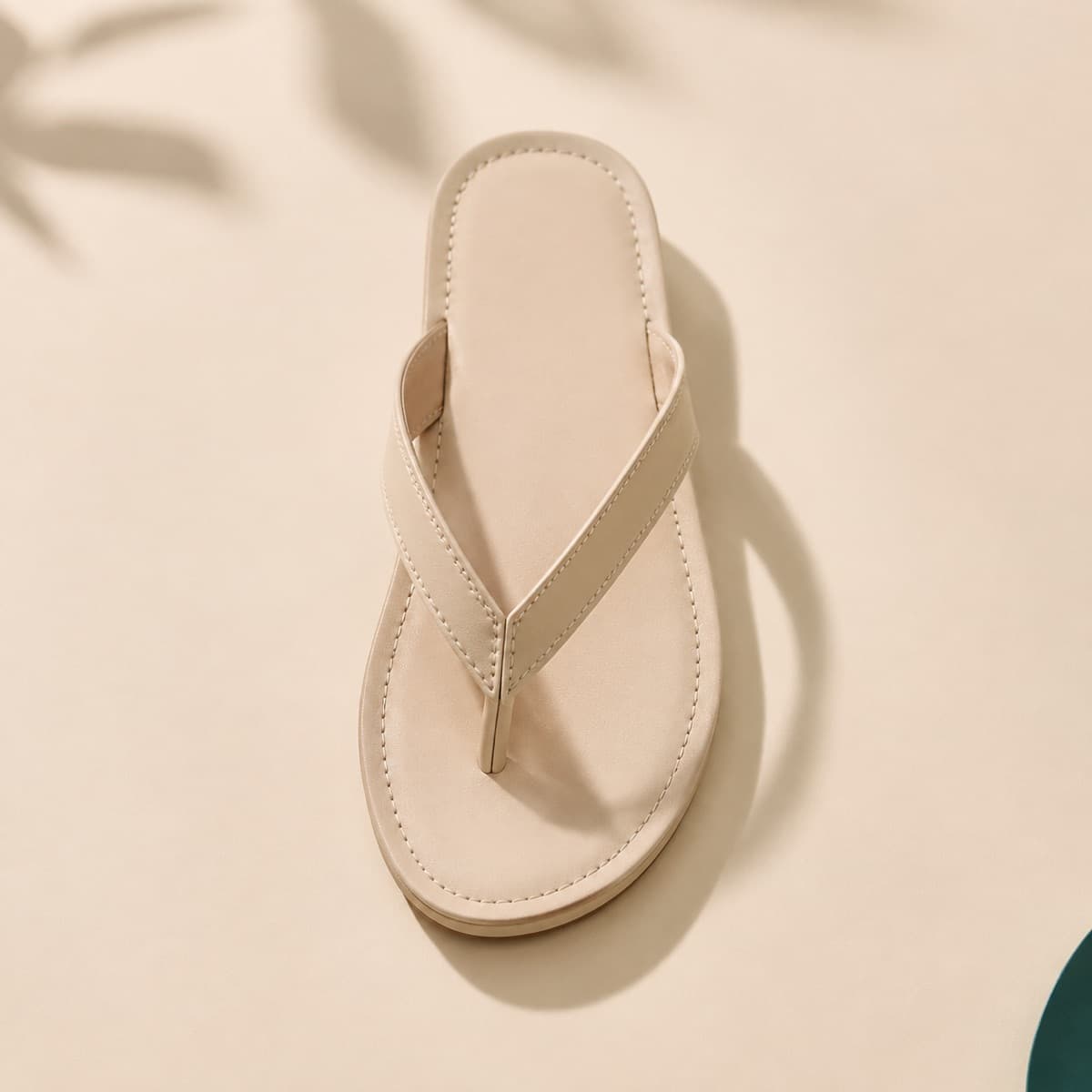
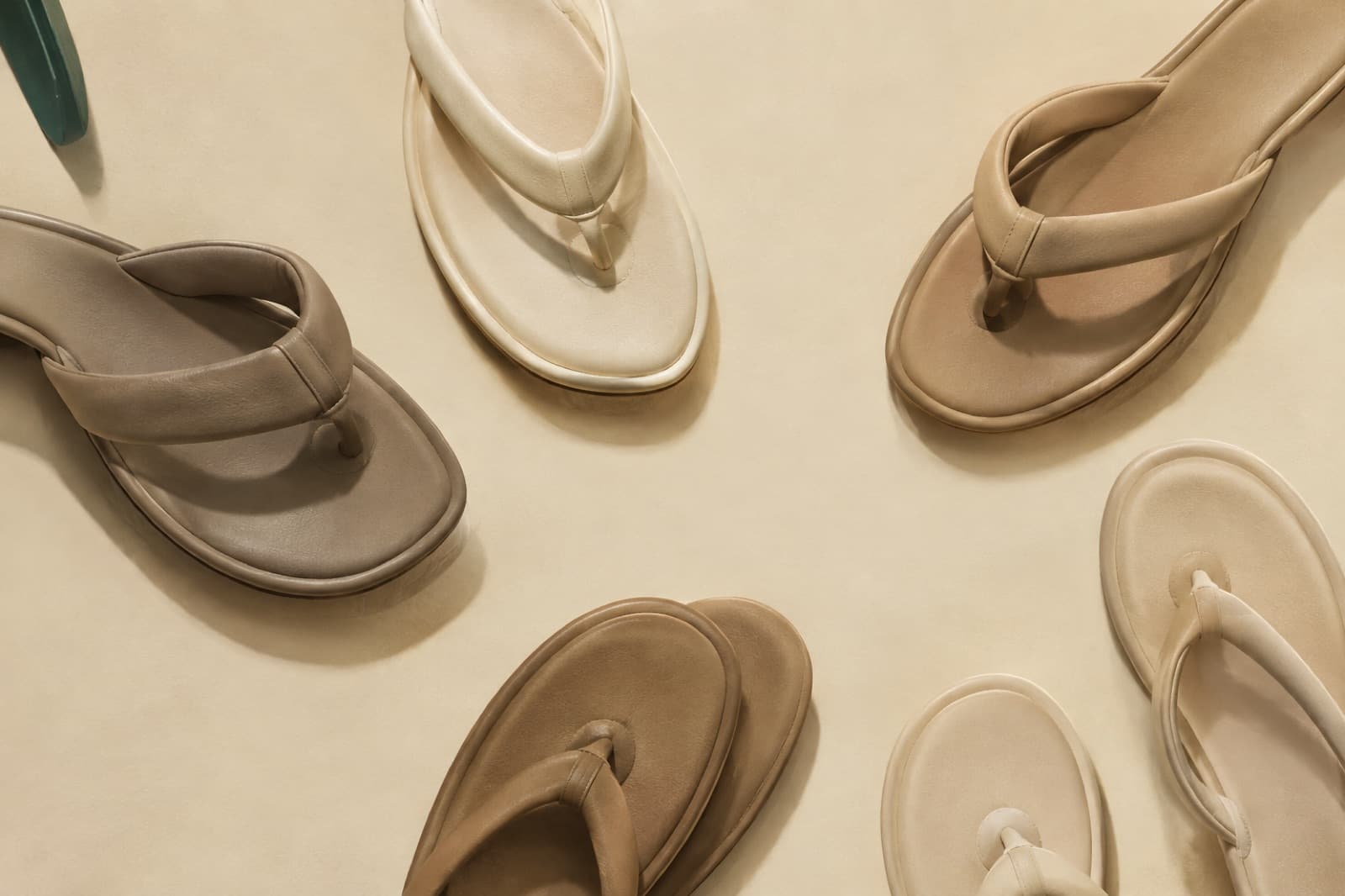
Toe-Post
Toe-Post Leather
A post cut from the same hide as the strap, with no core showing.
USD 118
Max instep 58 mm
Price in US Dollars (USD). VAT included where applicable. Free standard shipping over USD 119.
Going up a size makes the sandal longer, not taller. It will not fix a tight instep — the strap anchor points move forward, not upward.
- 14 days to withdraw — indoor try-on only, on carpet.
- 3-year legal guarantee on manufacturing defects.
- Shipping and returns — dispatch within 2 working days.
The numbers
- 58mm
- Maximum instep
- 12mm
- Heel height
- 9mm
- Footbed thickness
- 94mm
- Forefoot width
Three things to know before you buy
One · where this pair can rub
- 1
In the gap between the first and second toe
A toe-post sits in a skin fold that has almost no callus. Sweat softens the skin there, and the post moves against it with every step.
What reduces it: Wear short indoors first. A padded post sleeve or a small anti-rub pad wrapped around the base of the post spreads the contact.
- 2
Along the back heel edge
The rear edge of the footbed meets the heel at an angle while the leather is still firm.
What reduces it: The edge rounds off with wear. Until it does, an oval anti-rub pad on the heel edge — not on your skin — takes the contact.
Two · break-in
It is the post that needs breaking in, not the strap. Expect 3–5 short wears before the post stops registering between your toes.
Leather Strap Softener — USD 28Three · barefoot wear
Worn barefoot, the footbed takes sweat directly. Wipe it with a barely damp cloth after each wear and let it dry away from direct sun. The leather will darken where the ball of your foot and heel sit — that is patina, and it is a characteristic of unfinished leather, not a fault.
How to clean a footbed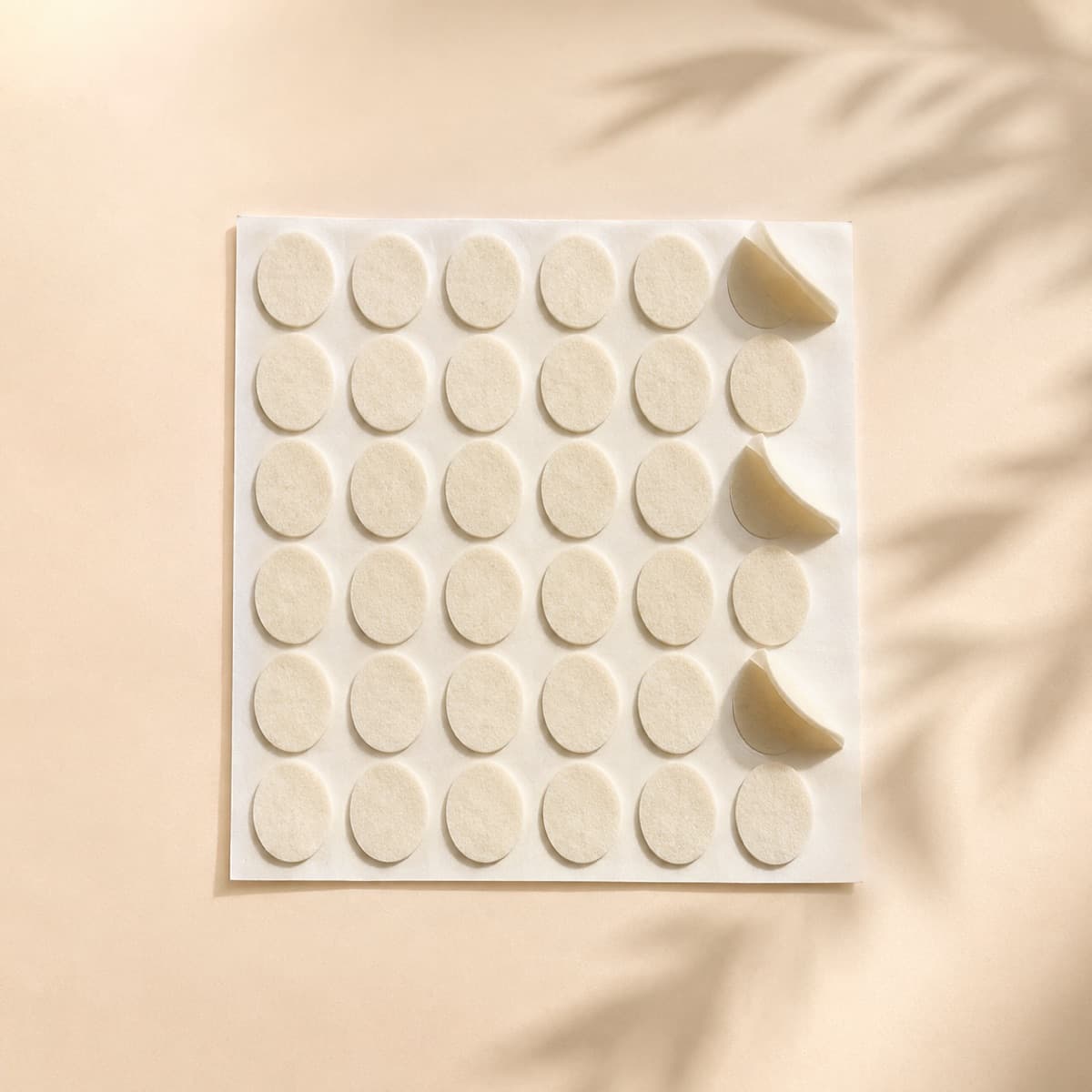
Pads cut for the 2 points marked above
in the gap between the first and second toe, along the back heel edge — the shapes in this set are cut for exactly these positions. They go on the sandal, not on your skin.
Materials
Declared under Directive 94/11/EC · three parts, three materials
- UpperParte superior
- Leather (Couro)
Vegetable-tanned cowhide, 1.8–2.2 mm, unlined
- Lining and insoleForro e palmilha
- Leather (Couro)
Full-grain cowhide footbed cover, tanned without chromium
- OutsoleSola
- Other materials (Outros materiais)
Vulcanised rubber outsole, 6 mm
Where a single material makes up at least 80% of a part, only that material is declared. Where none reaches 80%, the two main materials are declared, as the directive requires. The same three rows are printed on the label sewn into every pair.
Sizes, in centimetres
EU numbers are not a unit of length. Measure your foot from the wall to your longest toe and read the centimetre column instead.
| EU size | Foot length | Forefoot width |
|---|---|---|
| 35 | 22.5 cm | 94 mm |
| 36 | 23.2 cm | 94 mm |
| 37 | 23.8 cm | 94 mm |
| 38 | 24.5 cm | 94 mm |
| 39 | 25.2 cm | 94 mm |
| 40 | 25.8 cm | 94 mm |
| 41 | 26.5 cm | 94 mm |
| 42 | 27.2 cm | 94 mm |
Chemical compliance
- Chromium VI — leather parts tested to no more than 3 mg/kg, the limit set by REACH Annex XVII entry 47.
- Azo dyes — dyes restricted under REACH Annex XVII entry 43 are not used on any part in contact with skin.
- Nickel release — buckles and eyelets meet the release limits of REACH Annex XVII entry 27 for prolonged skin contact.
Test reports are held on file and can be requested at our contact page.
Others in Toe-Post
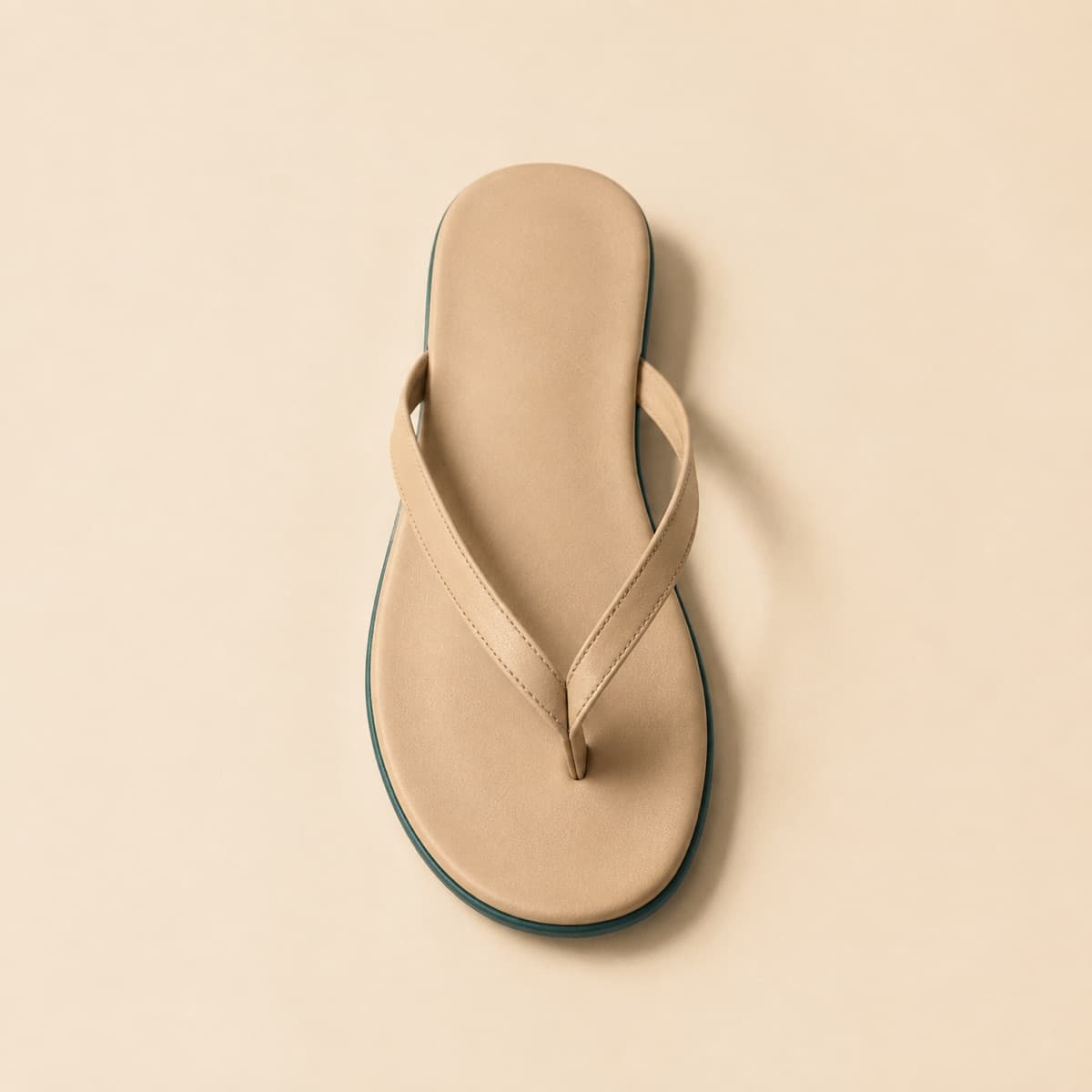
Toe-Post Basic
USD 72
The classic V. Lowest profile we make.
- Max instep
- 56 mm
- Heel
- 12 mm
- Footbed
- 8 mm
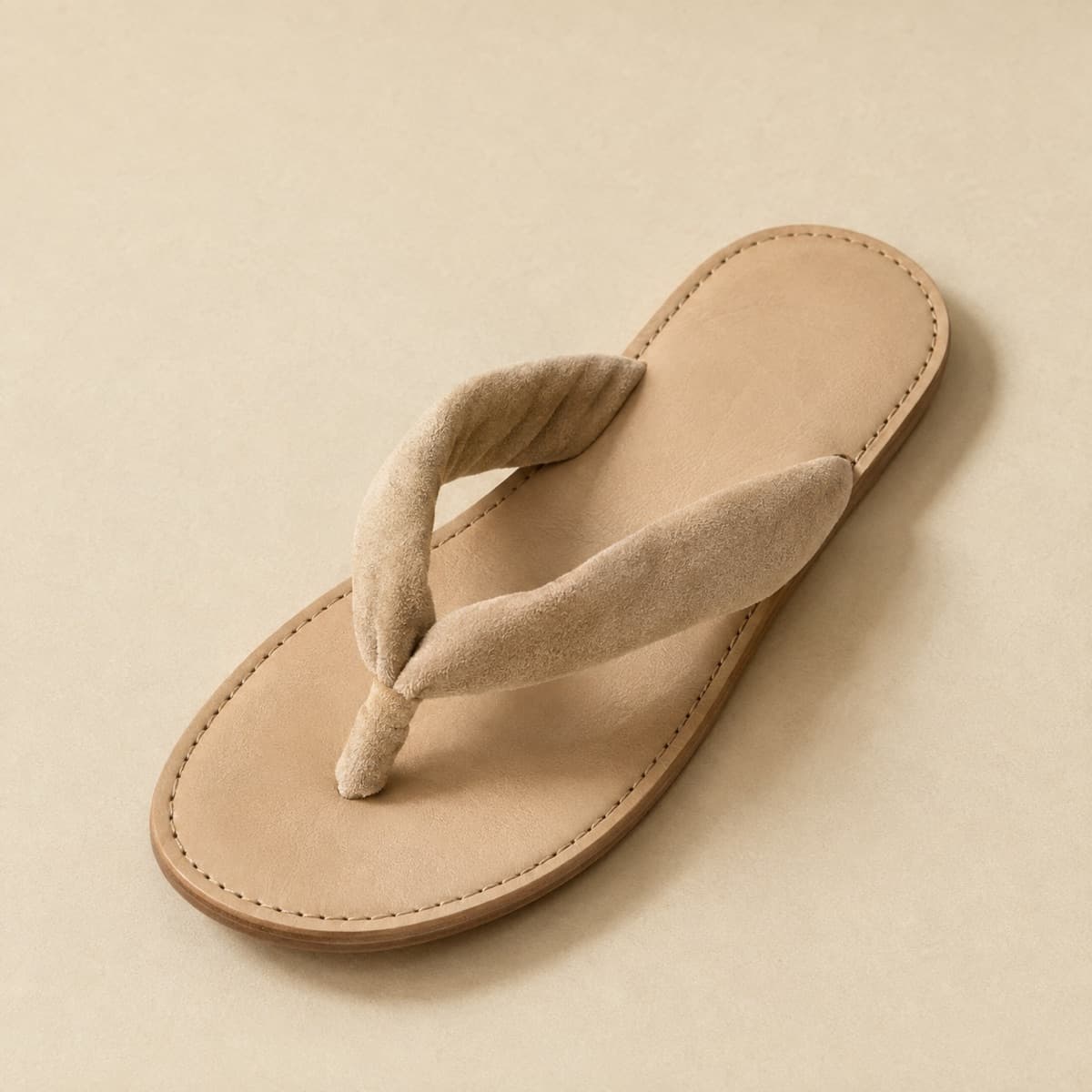
Toe-Post Padded
USD 98
The post is wrapped in a soft sleeve, so the contact surface is wider and rounder.
- Max instep
- 58 mm
- Heel
- 12 mm
- Footbed
- 9 mm
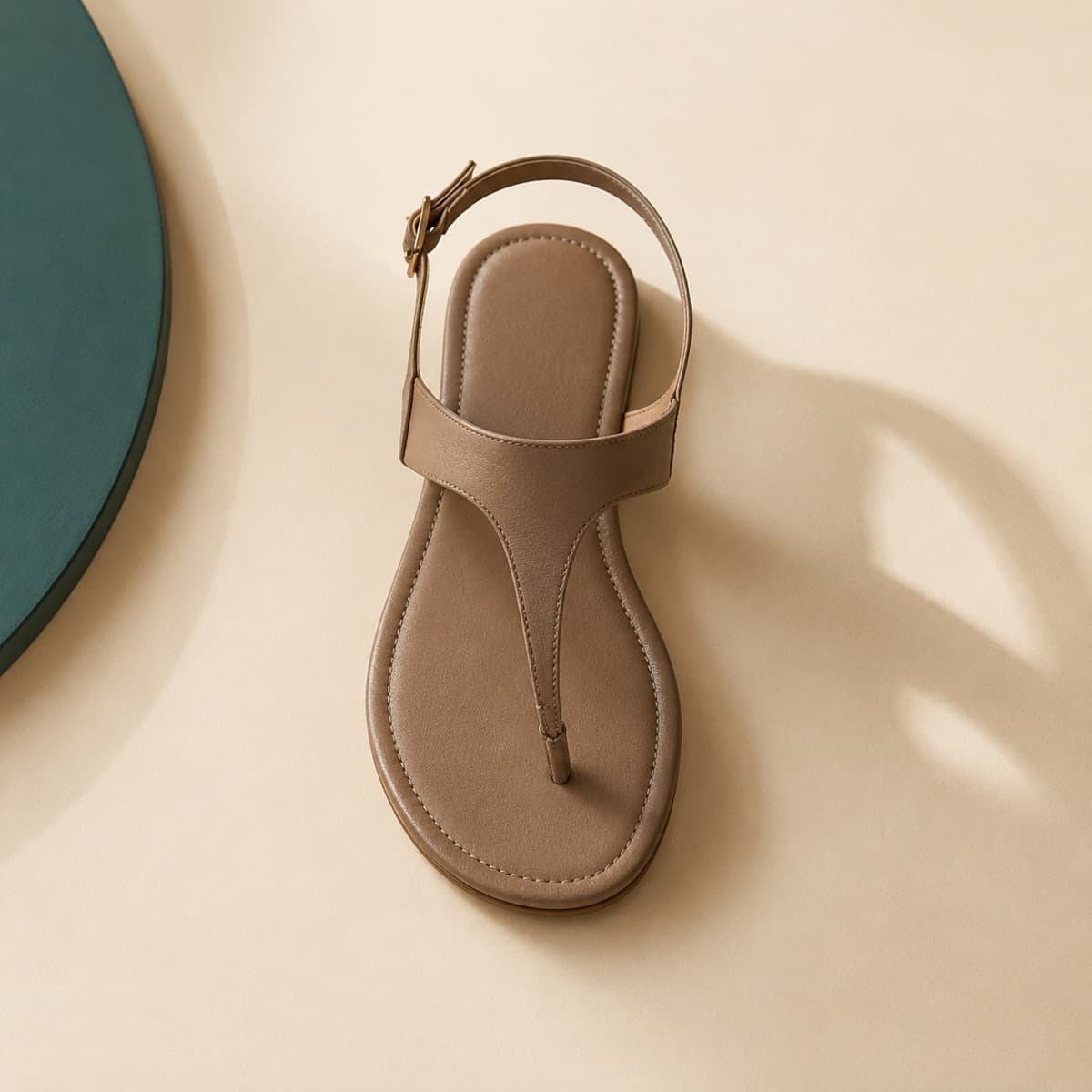
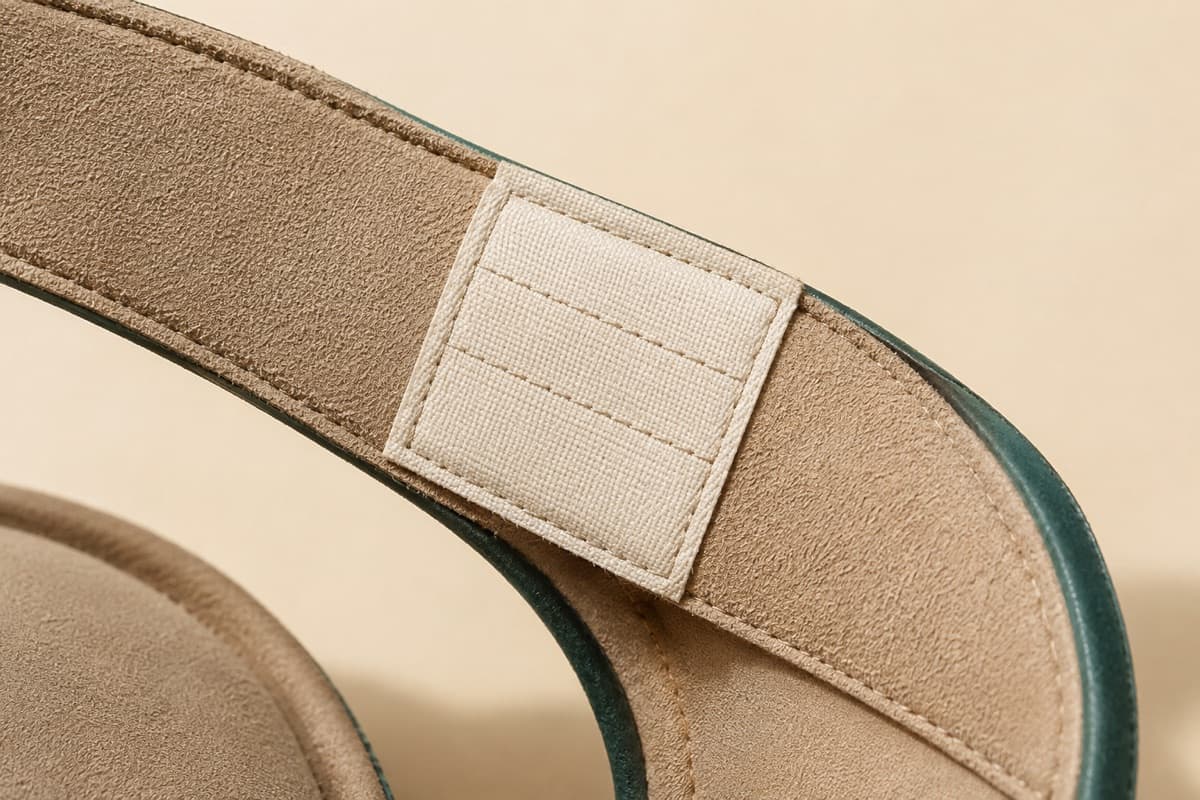
3.0 cm adjustable
Toe-Post Ankle
USD 138
An ankle strap takes the load off the post, which is where most toe-post rubbing starts.
- Max instep
- 60 mm
- Heel
- 14 mm
- Footbed
- 9 mm